
 French
  English
  Russian
  Spanish
  German
  Italian
  Portuguese
  Korean
  Japanese
  Arabic
  Turkish
  Indonesian
  Dutch
Dutch 

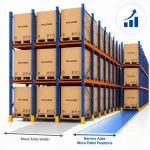
Warehouse space is expensive, and many companies cannot simply build a larger facility every time pallet volume grows. More SKUs, faster fulfillment cycles, e-commerce pressure, cold storage costs, and higher rent are forcing warehouse managers to use every square meter more intelligently. This is why the Chariot élévateur VNA has become a serious investment for high-density storage operations.
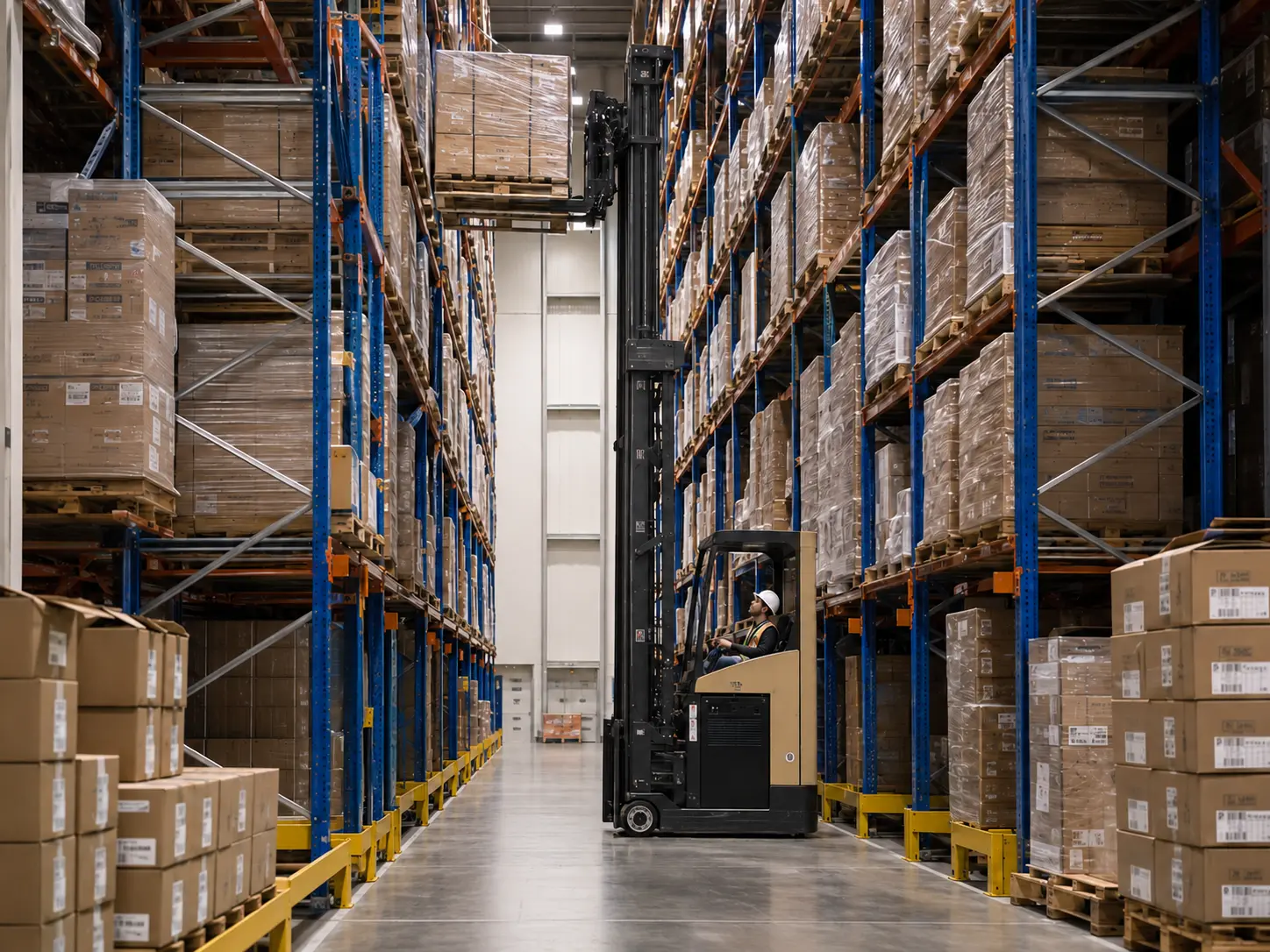
A VNA Forklift, also called a Very Narrow Aisle Forklift, is not just a smaller forklift. It is a specialized warehouse truck designed to operate in very narrow rack aisles, often with high mast configurations, guided travel, and side-loading or turret-style pallet handling. Instead of turning the full truck body inside the aisle, a VNA truck can handle pallets on both sides of the aisle through fork movement, turret rotation, or narrow aisle handling mechanisms.
For buyers planning a high-rack warehouse, the starting point is understanding whether a dedicated Chariot élévateur VNA fits the warehouse layout, pallet size, rack height, floor condition, and daily handling volume. The wrong purchase can create expensive problems. The right purchase can increase storage density, reduce wasted aisle space, and improve long-term warehouse utilization.
VNA Forklift supplier
Understanding the Core Mechanics of VNA Forklifts
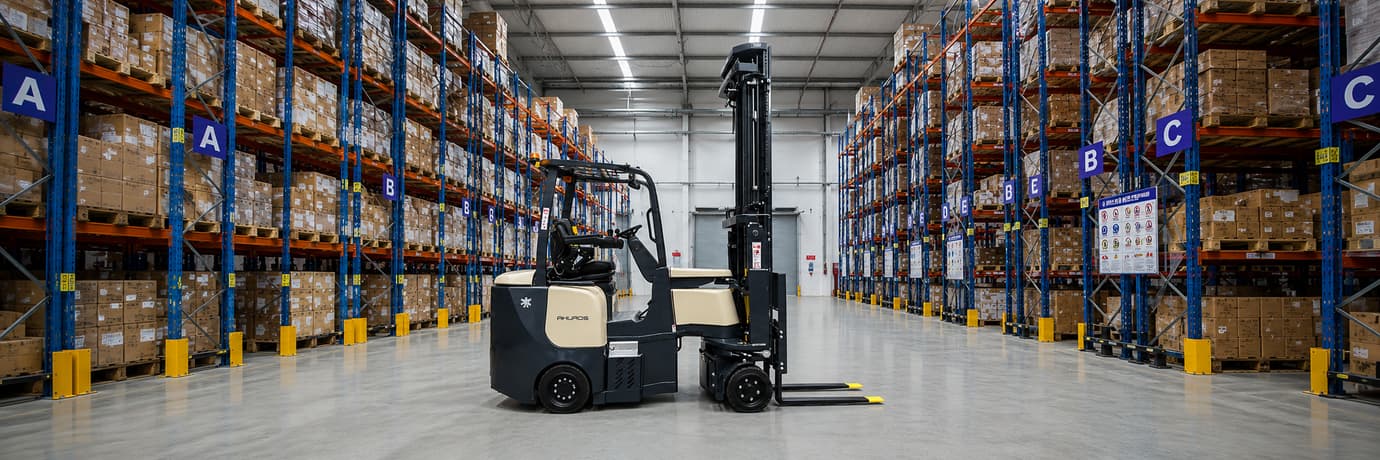
The main idea behind a VNA Forklift is simple: reduce aisle width while still allowing safe and accurate pallet handling. A standard counterbalance forklift needs enough room to turn with the load. A reach truck needs less space because it is designed for narrow aisles. A VNA Forklift goes further by working inside a very narrow aisle and handling pallets sideways without turning the entire truck.
Many VNA trucks use a turret head or rotating fork system. This allows the fork carriage to turn left or right, so the truck can pick or place pallets on both sides of the rack. Some models are man-up, meaning the operator cabin rises with the load for better visibility at high levels. Others are man-down, meaning the operator remains near floor level while the mast and load-handling system work above.
Because VNA aisles are tight, guidance is often used. Wire guidance, rail guidance, magnetic guidance, or electronic aisle-assist systems help keep the truck centered and reduce steering error. This is important because in a very narrow aisle, a small driving mistake can damage racks, pallets, or the truck itself. The truck may be compact, but the bill for hitting a rack upright is not compact at all.
| Mechanism | Fonction | Buyer Benefit | Risk If Ignored |
|---|---|---|---|
| Turret fork or rotating head | Handles pallets sideways | Reduces aisle width requirement | Wrong fork system limits pallet access |
| High mast | Reaches upper rack levels | Improves vertical storage utilization | Requires floor flatness and residual capacity check |
| Guidance system | Keeps the truck centered in the aisle | Improves safety and positioning accuracy | Manual steering risk increases in tight aisles |
| Motorisation électrique | Powers indoor warehouse operation | Cleaner, quieter, and suitable for indoor use | Battery and charging planning are required |
| Operator control system | Manages travel, lifting, fork rotation, and positioning | Improves handling accuracy | Training gaps reduce productivity and safety |
VNA Forklifts vs. Standard Reach Trucks: Space Efficiency Metrics
The biggest business reason to choose a VNA Forklift is space efficiency. A warehouse does not make money from empty aisles; it makes money from stored goods, picking performance, and efficient flow. By reducing aisle width, a VNA warehouse layout can fit more rack rows into the same building footprint.
A counterbalance forklift often needs wide aisles because it must turn with the pallet. A reach truck can operate in narrower aisles and is common in many pallet warehouses. A VNA Forklift is more specialized and can work in much tighter aisles, especially when paired with high-bay racking and guidance systems. The exact aisle width depends on the truck model, pallet size, load dimensions, rack depth, fork length, safety clearance, and guidance method.
When comparing alternatives, some warehouses may find that a N15 narrow aisle forklift is suitable for moderate aisle reduction, while a true VNA system may be required when storage density is the main target. The practical decision should be based on layout drawings, not only product names. If the warehouse needs flexibility, a narrow aisle truck may be enough. If the warehouse needs maximum pallet positions, a VNA solution becomes more relevant.
| Type d'équipement | Typical Aisle Width Range | Best Use | Densité de stockage |
|---|---|---|---|
| Counterbalance forklift | About 3.2–4.0 m | General warehouse, loading areas, outdoor yards | Low to medium |
| Reach truck | About 2.6–3.0 m | Narrow aisle pallet storage | Medium to high |
| Chariot élévateur VNA | About 1.6–2.1 m depending on model and layout | Very narrow aisle high-rack storage | Consommation d’énergie par palette |
| Automated VNA system | Project-specific | High-throughput automated warehouses | Consommation d’énergie par palette |
Key Performance Parameters: Mast Height and Load Capacity
The two most important technical parameters for a VNA Forklift are mast height and load capacity. However, buyers should be careful: rated capacity at ground level does not always equal safe capacity at maximum lift height. A truck may be described as 1.5 tons or 2.0 tons, but the real question is what it can lift at the required rack height and load center.
Mast height must match the warehouse racking system. Buyers should confirm maximum lift height, collapsed mast height, free lift, top beam height, ceiling clearance, sprinkler clearance, and pallet placement tolerance. Residual capacity is especially important. If the pallet is heavy or the load center is long, capacity at high lift may be lower than expected.
For heavier pallet handling in narrow aisle warehouse applications, a model such as the N20 narrow aisle forklift may be reviewed when the buyer needs stronger load support than a smaller unit. The correct model should be matched to pallet weight, rack height, aisle size, and expected daily movement—not selected by capacity label alone.
| Parameter | Pourquoi cela importe | Buyer Check |
|---|---|---|
| Maximum lift height | Determines highest reachable rack level | Match with top beam height and pallet clearance |
| Collapsed mast height | Affects doorways and low-clearance movement | Check entrance height and internal passages |
| Residual capacity | Shows real capacity at height | Ask for the load chart before purchase |
| Load center | Affects stability and lifting capacity | Confirm pallet size and load distribution |
| Fork length | Must match pallet depth and rack type | Confirm standard and optional fork sizes |
| Battery capacity | Affects shift performance | Match battery with daily operating hours |
Man-Up vs. Man-Down VNA Forklifts
One of the key configuration decisions is whether to use a man-up or man-down VNA Forklift. In a man-up truck, the operator cabin rises with the load. This gives the operator better visibility when handling pallets at high rack levels and may also support case picking or high-level inspection. In a man-down VNA truck, the operator remains at floor level while the mast and fork system handle the pallet.
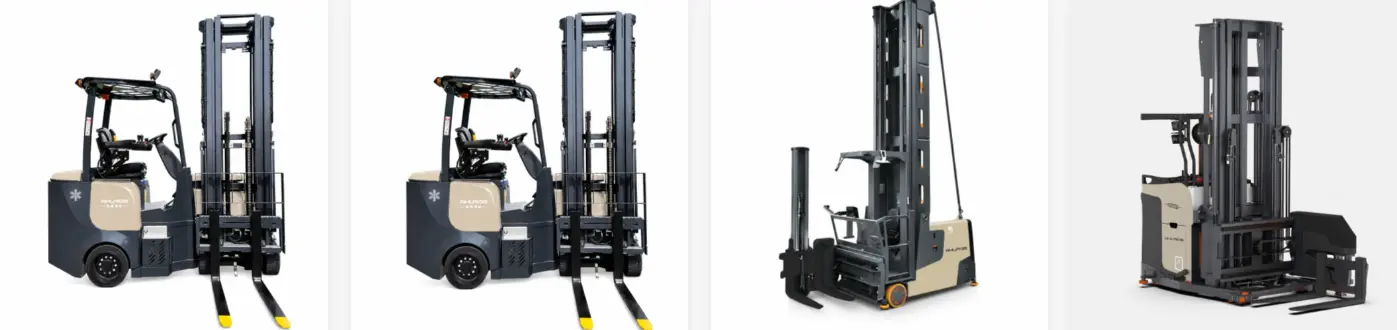
A man-up VNA system is often chosen for high-bay warehouses, high-level pallet handling, and operations where visibility matters. A K16 man-up turret truck is relevant when operators need a raised platform and turret-style handling for high-density storage. This type of solution usually requires stronger operator training and more careful warehouse planning, but it can improve accuracy in tall rack systems.
Man-down VNA trucks can be simpler for pallet storage where the operator does not need to rise with the load. They may be attractive for warehouses that need dense storage but want a different cost, training, or operating profile. Both types can be effective. The wrong choice is not man-up or man-down; the wrong choice is buying either one before confirming the rack height, visibility requirement, pallet weight, aisle layout, and operator workflow.
Guidance Systems: Wire Guided, Rail Guided, and Assisted Operation
Guidance is a major part of VNA performance. In very narrow aisles, manual steering can create too much risk because the clearance between truck, load, pallet, and rack is limited. Wire guidance uses an embedded wire in the floor to guide the truck electronically. Rail guidance uses physical guide rails along the aisle. Other systems may use magnetic guidance, laser assistance, aisle positioning, cameras, or semi-automatic functions.
Wire guidance creates a cleaner aisle but requires floor cutting and installation work. Rail guidance is more physical and may also help protect rack faces, but it occupies aisle-edge space and affects cleaning and layout flexibility. Assisted guidance may improve driver confidence, but it also adds cost and service complexity. The guidance decision should be made together with rack design and floor planning.
| Guidance Type | Advantage | Limitation | Meilleur pour |
|---|---|---|---|
| Wire guided | Clean aisle and accurate travel path | Requires embedded wire and floor work | Modern high-density warehouses |
| Rail guided | Strong physical guidance | Rails occupy aisle edge space | Simple long aisle pallet storage |
| Manual steering | Lower initial setup cost | Higher risk in true VNA aisles | Wider narrow aisles only |
| Semi-assisted guidance | Improves repeatability | Higher technical support requirement | Large distribution centers |
Warehouse Floor Requirements for VNA Forklifts
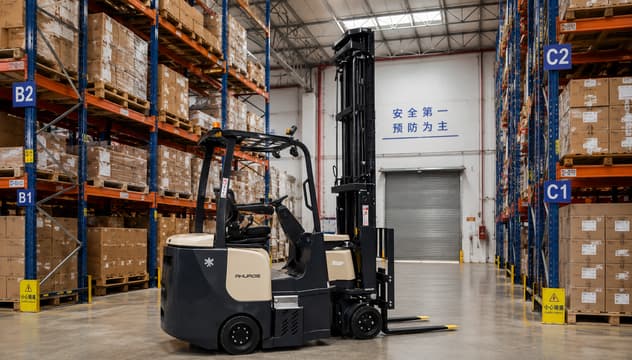
A VNA Forklift can only perform well if the floor is suitable. High lift height and narrow aisle clearance make floor flatness critical. Small floor unevenness at ground level becomes a larger stability and mast-sway issue when the truck is working at height. This is one of the most common buyer mistakes: they focus on the forklift price but ignore the floor that the forklift must stand on.
Buyers should review floor flatness, levelness, joint quality, load-bearing capacity, surface wear, dust control, and guidance installation needs. In cold storage warehouses, floor conditions become even more important because temperature, condensation, battery performance, and tire grip may affect operation. If the floor is not suitable, even a good VNA Forklift may operate slowly, inaccurately, or unsafely.
For warehouses that need dense pallet storage but want the operator to remain at floor level, a KD16 man-down VNA can be considered for high-density rack-to-rack operation. This type of truck still requires correct aisle width, floor quality, and capacity matching. VNA is a system decision, not just an equipment purchase.
Chariot élévateur VNA
VNA Forklift vs. Reach Truck vs. Counterbalance Forklift
A VNA Forklift is best when the warehouse needs maximum storage density. A reach truck is a strong option when the warehouse needs narrow aisle operation with more flexibility and lower infrastructure requirements. A counterbalance forklift remains useful for loading docks, outdoor yards, general movement, and mixed material handling tasks.
For many operations, the best warehouse fleet uses more than one truck type. A counterbalance forklift may handle truck loading and outdoor movement. Reach trucks may handle medium-density storage. VNA Forklifts may handle high-density rack aisles. Buying one truck type and expecting it to do everything is a common way to disappoint both the warehouse manager and the finance department.
| Fonctionnalité | Chariot élévateur VNA | Chariot élévateur | Chariot élévateur à contrepoids |
|---|---|---|---|
| Aisle width need | Lowest | Moyen | Highest |
| Storage density | Highest | Haut | Low to medium |
| Outdoor use | Usually not ideal | Limitée | Good depending on tire and power type |
| Infrastructure need | Haut | Moyen | Faible |
| Operator training need | Haut | Moyen | Moyen |
| Best use | High-density pallet storage | Entrepôts à allées étroites | General logistics and loading |
Real Warehouse Scenarios for VNA Forklifts
E-commerce fulfillment centers use VNA systems when SKU growth requires more pallet positions inside the same building. Cold storage facilities may also benefit because building and energy costs are high, so increasing storage density can improve the value of each cubic meter. 3PL warehouses may use VNA layouts when clients need more stored inventory and less wasted aisle space.
Manufacturing plants use VNA Forklifts for finished goods, raw materials, and production buffer storage where pallet types are controlled. Import and export distribution centers may use VNA systems when pallets are standardized and storage flow is predictable. The best VNA applications usually have stable pallet sizes, disciplined traffic flow, suitable floors, and rack layouts designed around the truck.
For cold-chain and dense warehouse layouts, an electric forklift such as the E16 3-wheel electric forklift for cold storage can be part of the broader discussion when the buyer needs maneuverability, indoor electric operation, and compact movement outside true VNA aisles. Not every narrow aisle problem requires a VNA truck; sometimes a compact electric forklift supports the surrounding workflow better.
Safety, Training, and Compliance Considerations
VNA Forklifts work at height, in tight aisles, near racks, and often with guided travel systems. Safety planning is essential. Operators must understand load charts, residual capacity, fork positioning, guidance operation, emergency lowering, rack clearance, battery safety, and daily inspection routines. Warehouse managers must also plan pedestrian separation, traffic control, rack protection, lighting, floor markings, and emergency procedures.
In the United States, powered industrial truck operators must receive training and evaluation under OSHA requirements. Training should include formal instruction, practical training, and workplace performance evaluation, and operator performance must be evaluated periodically. Even outside the U.S., this principle still applies: a VNA Forklift is only as safe as the system, training, and discipline around it.
| Safety Item | Pourquoi cela importe | Buyer Action |
|---|---|---|
| Formation des opérateurs | Required for safe powered industrial truck operation | Confirm training program before operation |
| Load chart | Prevents overload at height | Train operators to read residual capacity |
| Daily inspection | Detects defects early | Use a written checklist |
| Pedestrian control | Prevents aisle collision | Separate people and trucks |
| Rack protection | Reduces impact damage | Install guards and end protection |
| Battery safety | Prevents charging hazards and downtime | Plan charging area and maintenance routine |
Common Mistakes When Buying a VNA Forklift
The first mistake is buying the truck before designing the rack layout. VNA operation depends on aisle width, rack depth, pallet dimensions, beam height, and floor condition. The second mistake is ignoring floor flatness. A warehouse floor that works for a counterbalance forklift may not be good enough for a high-mast VNA truck.
The third mistake is looking only at rated capacity. Buyers must check residual capacity at height and load center. The fourth mistake is underestimating operator training. The fifth mistake is forgetting battery and charging planning. The sixth mistake is treating a VNA Forklift like a general forklift. A VNA truck is excellent in the right aisle, but it is not designed to replace every loading dock, yard, and mixed handling task.
Chariot élévateur VNA
VNA Forklift Buying Checklist
Before contacting a supplier, buyers should prepare warehouse drawings, pallet size, pallet weight, rack height, target aisle width, floor condition, door height, ceiling height, daily pallet movement, shift hours, temperature conditions, and charging requirements. The more information the buyer provides, the more accurate the equipment recommendation becomes.
Supplier support also matters. A warehouse equipment provider should understand not only forklifts but also rack planning, warehouse flow, application matching, and after-sales support. Buyers can review the background of an Akuros warehouse solution provider when evaluating whether the company can support equipment selection, planning, leasing, service, and logistics consulting. For VNA projects, this broader support can be more valuable than a simple truck quote.
| Details to Confirm | Pourquoi cela importe |
|---|---|
| Rated and residual capacity | Prevents overload at working height |
| Maximum lift height | Matches the top rack beam |
| Aisle width requirement | Ensures safe rack-to-rack operation |
| Guidance system | Improves accuracy in very narrow aisles |
| Battery capacity and charging | Supports daily shift performance |
| Floor flatness requirement | Controls stability and mast sway |
| Spare parts and service | Reduces downtime after purchase |
| Training support | Improves safety and operator confidence |
High-quality VNA Forklift
Questions fréquentes
1. What is a VNA Forklift?
A VNA Forklift is a Very Narrow Aisle forklift designed for high-density warehouse storage. It operates in much narrower aisles than standard counterbalance forklifts or many reach trucks, helping warehouses store more pallets within the same building area. Many VNA forklifts use turret forks, rotating load-handling systems, or guided travel to pick and place pallets on both sides of the aisle without turning the whole truck body. It is best used in high-rack warehouses where storage density is more important than general outdoor movement.
2. How wide is a VNA forklift aisle?
A VNA forklift aisle is often around 1.6 to 2.1 meters, but the exact width depends on the forklift model, pallet size, load dimensions, rack design, fork length, guidance system, and required safety clearance. Buyers should never rely on a general aisle width number alone. The correct aisle width must be confirmed with the manufacturer’s technical drawing, pallet data, and warehouse layout. A small measurement error can affect turning clearance, rack protection, and safe pallet handling.
3. What is the difference between a VNA Forklift and a reach truck?
The main difference between a VNA Forklift and a reach truck is specialization. A reach truck is designed for narrow aisles and offers good flexibility in many warehouse layouts. A VNA Forklift is designed for very narrow aisles and higher storage density, often using turret forks, guided travel, or specialized load-handling systems. Reach trucks are usually easier to apply in medium-density warehouses, while VNA forklifts are better for facilities that want to reduce aisle width, increase rack positions, and maximize pallet storage capacity.
4. What capacity should I choose for a VNA Forklift?
The correct VNA Forklift capacity should be based on actual pallet weight, load center, lift height, rack level, attachment type, and residual capacity at height. Buyers should not choose only by nominal rated capacity. A truck rated for a certain load at low height may have lower capacity at maximum mast height. Before purchase, provide the supplier with pallet dimensions, maximum load weight, required lift height, and rack layout. The supplier should then provide a suitable load chart and model recommendation.
5. Is a VNA Forklift suitable for every warehouse?
No, a VNA Forklift is not suitable for every warehouse. It is best for high-density pallet storage, high-rack systems, stable pallet sizes, suitable floors, controlled traffic, and warehouses where storage density is a major business priority. It is not ideal for frequent outdoor movement, truck loading yards, rough floors, mixed irregular loads, or operations that need one forklift to perform many general tasks. Before buying, buyers should check aisle layout, floor flatness, rack height, pallet weight, guidance needs, operator training, and maintenance support.
Références
- “29 CFR 1910.178 Powered Industrial Trucks” — Occupational Safety and Health Administration — OSHA Safety Standard
- “Powered Industrial Trucks: Operator Training” — Occupational Safety and Health Administration — OSHA Training Resource
- “ANSI/ITSDF B56.1 Safety Standard for Low Lift and High Lift Trucks” — Industrial Truck Standards Development Foundation — Industrial Truck Safety Standard
- “ISO 3691-1 Industrial Trucks Safety Requirements” — International Organization for Standardization — Industrial Truck Safety Reference
- “Warehouse Racking and Storage Systems Guide” — MHI — Material Handling Industry Resource
- “Forklift Stability and Load Handling Guidance” — National Safety Council — Workplace Safety Resource
- “Warehouse Design and Aisle Planning Principles” — Warehousing Education and Research Council — Logistics Planning Resource
- “Electric Forklift Battery Charging Safety Guidance” — Battery Council International — Battery Safety Resource
Final Buyer Insight: When a VNA Forklift Is the Right Warehouse Investment
What problem does a VNA Forklift solve?
A VNA Forklift solves the problem of limited warehouse space by reducing aisle width and supporting higher-density pallet storage. It is most valuable when the business needs more pallet positions from the same building footprint.
How should buyers decide? Start with the warehouse layout, not the forklift catalog. Confirm pallet size, pallet weight, rack height, aisle width, floor flatness, operating hours, guidance method, and battery strategy before choosing a model.
Why do VNA projects fail?
Most problems come from buying the truck before planning the aisle, rack, floor, and operator process. A VNA Forklift is a system investment. If the warehouse floor, racking, and guidance do not match the truck, the equipment cannot deliver its full value.
Option logic: If storage density is the main business problem, choose a VNA Forklift. If the warehouse needs flexible general movement, choose a reach truck or counterbalance forklift. If the warehouse needs high rack storage and very narrow aisles, choose a guided VNA truck. If the facility mainly loads trucks and works outdoors, a counterbalance forklift is usually more practical.
Recommendation: Before selecting a model, prepare the warehouse layout, aisle target, pallet dimensions, load weight, rack height, shift schedule, and charging requirements. Buyers can send these details through the Akuros contact page to discuss a suitable warehouse equipment configuration and avoid choosing a truck that does not match the storage system.
The best VNA investment is not the truck with the highest mast or the lowest price. It is the truck that fits the aisle, rack, pallet, floor, operator, and daily workflow with the least long-term risk.