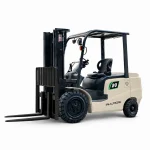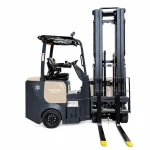



Forklifts for Cold Storage must be engineered for low-temperature performance, moisture exposure, and high-uptime warehouse operation. A refrigerated or frozen warehouse is not just a normal warehouse with a lower temperature setting. Low temperature affects battery output, hydraulic oil viscosity, tire traction, braking distance, electronic components, seals, wiring, operator comfort, charging efficiency, and maintenance frequency.
For cold chain warehouse operators, frozen food distributors, seafood processors, dairy warehouses, pharmaceutical cold rooms, supermarket distribution centers, and 3PL logistics providers, forklift downtime is not a small inconvenience. It can delay order fulfillment, increase door-open time, expose temperature-sensitive goods to risk, reduce picking efficiency, and disrupt outbound delivery schedules. The right forklift must support safety, cold chain stability, and total project ROI.
Before selecting a truck, buyers should define the real operating environment: temperature zone, pallet weight, lift height, aisle width, shift length, door transition frequency, floor condition, charging area, and service plan. A supplier with cold chain application experience, such as an experienced Forklifts for Cold Storage manufacturer, can help connect equipment selection with warehouse layout, battery planning, and long-term maintenance needs.
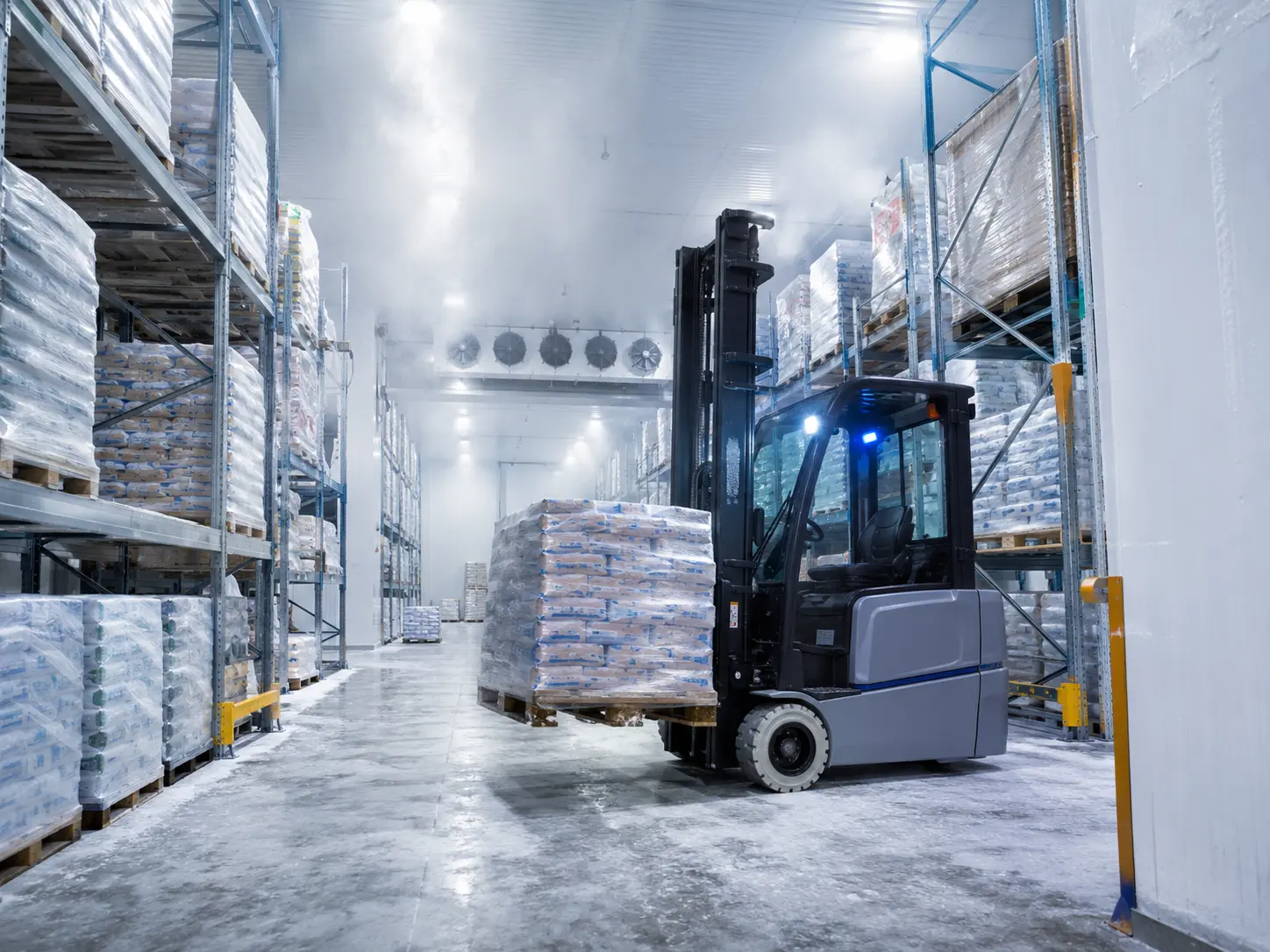
Forklifts for Cold Storage
What Are Forklifts for Cold Storage?
Forklifts for Cold Storage are forklifts selected, configured, or adapted to operate in refrigerated warehouses, cold rooms, freezer warehouses, chilled food distribution centers, and temperature-controlled logistics facilities. They may include electric counterbalance forklifts, reach trucks, VNA forklifts, pallet stackers, electric pallet trucks, order pickers, and other cold-room-compatible material handling equipment.
The operating temperature can vary widely. Chilled storage may operate around 0°C to 8°C. Refrigerated rooms may operate around -5°C to 5°C. Freezer warehouses often operate around -18°C to -25°C. Deep freezer or blast freezer environments may operate below -30°C in certain facilities. These temperature differences matter because the forklift configuration for a chilled warehouse may not be enough for continuous freezer operation.
Cold storage creates a high-stress forklift environment. Batteries may lose usable capacity. Hydraulic oil may thicken. Electronic connectors may experience condensation when moving between warm and cold zones. Tires may lose traction on wet, icy, or frosted floors. Operators may work more slowly because of cold exposure. A forklift that performs well in a dry ambient warehouse may become unreliable if it is placed into freezer service without proper preparation.
| Cold Storage Factor | Impact on Forklift | Buyer Concern |
|---|---|---|
| Low temperature | Battery output and runtime may drop | Shorter operating time |
| Condensation | Moisture may enter electronics | Control failure risk |
| Frost and ice | Reduces traction and braking control | Safety and stability risk |
| Thickened hydraulic oil | Slower lift and tilt response | Reduced handling efficiency |
| Narrow aisles | Less maneuvering space | Correct truck type selection |
| Continuous operation | Higher uptime demand | Battery, service, and backup planning |
Understanding Cold Storage Temperature Zones Before Selecting Forklifts
Temperature range is the first selection factor. A chilled warehouse is less severe than a freezer warehouse, but it still creates moisture and condensation risks. A freezer warehouse adds stronger stress to batteries, hydraulic systems, tires, seals, displays, wiring, and operators. A deep freezer requires even more careful review because standard components may become stiff, slow, brittle, or unreliable under prolonged low-temperature exposure.
Buyers should not only ask, “What is the lowest temperature?” A more useful question is, “What is the full temperature profile of the forklift’s workday?” A forklift that stays inside a freezer may face different risks from a forklift that repeatedly moves between an ambient dock, refrigerated room, and freezer zone. Repeated warm-cold transition can create condensation, which may be more damaging than stable cold operation.
Door opening frequency, dock traffic, humidity, product type, charging location, and cleaning routine also affect forklift selection. A frozen seafood warehouse with wet floors requires different attention from a dry frozen packaged-food warehouse. A pharmaceutical cold room may prioritize clean electric operation, stability, documentation, and careful temperature control.
| Operating Zone | Typical Temperature Range | Forklift Selection Focus |
|---|---|---|
| Chilled warehouse | 0°C to 8°C | Moisture control and battery runtime |
| Refrigerated room | -5°C to 5°C | Anti-condensation and stable hydraulics |
| Freezer warehouse | -18°C to -25°C | Cold storage package and battery planning |
| Deep freezer | Below -30°C | Special low-temperature configuration |
| Loading dock | Variable | Condensation and traction control |
| Transition area | Warm-to-cold cycling | Electronics sealing and maintenance |
Key Forklift Types for Cold Storage Facilities
Electric counterbalance forklifts are commonly used for pallet movement, loading docks, staging areas, cold rooms, and general warehouse handling. They are suitable for indoor food and pharmaceutical environments because they avoid exhaust emissions and can handle standard pallet movement. However, battery performance, condensation protection, tire selection, and cold-rated configuration must be reviewed before freezer operation.
For general pallet movement in refrigerated or frozen warehouses, an Electric Counterbalance Forklift for Cold Storage can be considered when the facility needs flexible handling around docks, staging zones, pallet transfer areas, and mixed warehouse routes where turning space and load stability matter.
Reach trucks are often selected for high racking in cold storage because freezer space is expensive. They support vertical storage efficiency and can improve pallet density. Buyers should check mast height, residual capacity, visibility, fork camera options if needed, aisle width, and cold-rated components.
VNA forklifts can be useful in dense freezer warehouses where storage density is a major cost factor. Very narrow aisle systems can reduce aisle width and increase pallet positions, but they require flat floors, guidance systems, operator training, and strong service planning. Pallet stackers and electric pallet trucks are useful for dock handling, short-distance movement, small cold rooms, retail cold storage, and light-duty transfer work. Order pickers are important for cold chain distribution centers where case picking and mixed SKU handling drive labor efficiency.
| Forklift Type | Best Use in Cold Storage | Main Advantage | Key Risk |
|---|---|---|---|
| Electric counterbalance forklift | General pallet movement | Flexible handling | Battery runtime in cold |
| Reach truck | High racking | Vertical storage efficiency | Residual capacity limits |
| VNA forklift | Dense freezer aisles | Maximum storage density | High floor and guidance requirement |
| Pallet stacker | Light to medium-duty storage | Lower cost and compact | Limited capacity and height |
| Electric pallet truck | Dock and short movement | Simple and efficient | Not for high stacking |
| Order picker | Case picking | Better order fulfillment | Operator exposure to cold |
Battery Performance in Cold Storage: Lithium vs Lead-Acid
Battery performance is one of the biggest purchasing decisions for Forklifts for Cold Storage. Low temperatures slow chemical reactions inside batteries, reducing voltage stability and usable capacity. Charging behavior also changes in cold conditions. If buyers underestimate runtime, the result may be mid-shift downtime, delayed outbound orders, poor dock flow, and additional backup equipment costs.
Lithium battery forklifts are often preferred for multi-shift cold chain operations because they support fast charging, opportunity charging, and lower routine maintenance. However, buyers should confirm whether the battery management system is suitable for cold environments and whether battery heating or cold protection is needed. A lithium battery does not automatically solve every freezer problem unless the system is matched to the temperature profile.
Lead-acid batteries still appear in many warehouses because they may offer lower initial cost and familiar operation. However, in cold storage, lead-acid runtime can drop faster, charging rooms require planning, watering and maintenance are needed, and battery change processes may reduce efficiency. If shifts are predictable and budget is limited, lead-acid may still be considered, but the buyer should calculate actual runtime carefully.
| Battery Type | Strength | Cold Storage Risk | Best Use |
|---|---|---|---|
| Lithium battery | Fast charging, low maintenance | Needs cold-rated BMS or heating review | Multi-shift cold chain |
| Lead-acid battery | Lower initial cost | Capacity loss and maintenance burden | Predictable single-shift use |
| High-capacity battery | Longer runtime | Higher cost and weight | Long freezer operation |
| Opportunity charging | Reduces downtime | Requires charging planning | Busy cold warehouses |
| Battery heating system | Improves cold performance | Adds cost and complexity | Freezer and deep-freeze operations |
Low-Temperature Engineering Features Buyers Should Request
A cold storage package may include sealed electronics, low-temperature hydraulic oil, protected wiring, anti-condensation treatment, special lubricants, cold-rated display components, corrosion-resistant parts, and suitable battery configuration. These details matter because cold storage failure is often caused by systems that are not visible at first glance.
Low-temperature hydraulic oil helps maintain lifting, lowering, tilt, and steering response. In cold conditions, standard hydraulic oil may become thicker, causing slow movement and stress on pumps, valves, and seals. Cold-rated seals, hoses, and lubricants help reduce stiffness and leakage risk. Sealed electronics and protected wiring reduce moisture-related failure when equipment moves between warm and cold zones.
For short-distance pallet transfer, dock staging, and cold-room movement, an Electric Pallet Truck for Cold Storage Warehouse can support efficient pallet flow when buyers need compact equipment for cold docks, staging lanes, and lower-lift operations rather than high-racking tasks.
| Feature | Why It Matters | Buyer Question |
|---|---|---|
| Sealed electronics | Reduces moisture failure | Is the controller protected? |
| Low-temperature hydraulic oil | Maintains lifting response | What oil is recommended? |
| Cold-rated battery system | Improves runtime | Is battery heating available? |
| Anti-condensation protection | Protects wiring and display | How is moisture managed? |
| Cold-rated seals | Prevents cracking or stiffness | Are seals suitable for freezer use? |
| Heated cabin | Improves operator comfort | Is it required for long shifts? |
| Anti-slip tires | Improves traction | What tire type is used? |
| Corrosion protection | Protects parts from moisture | What coating is applied? |
Tire, Brake, and Traction Control in Freezer Warehouses
Cold storage floors can be more unpredictable than normal warehouse floors. Condensation, frost, ice, water near dock doors, and cleaning residue can reduce traction. A forklift carrying a heavy pallet at height has a higher center of gravity, and slippery flooring can increase braking distance or create turning instability.
Tire selection should match the floor condition. Cushion tires, polyurethane tires, rubber tires, non-marking tires, and cold-rated tread options may all be considered depending on the facility. Food and pharmaceutical warehouses may also require clean, non-marking tire solutions. For wet seafood or meat processing environments, traction and corrosion control become more important than in dry packaged frozen warehouses.
Operators should reduce speed in slippery transition zones, avoid sharp turns with raised loads, and keep loads low while traveling. Floor quality also matters. Freezer floors should be flat, clean, dry, and maintained. Poor drainage or frequent door-open condensation can create recurring safety risk even if the forklift itself is well specified.
| Condition | Forklift Risk | Recommended Control |
|---|---|---|
| Frost on floor | Reduced traction | Speed control and tire review |
| Wet dock area | Braking distance increases | Drainage and floor cleaning |
| Narrow aisle turning | Load instability | Correct truck type and training |
| High lift height | Higher center of gravity | Residual capacity check |
| Condensation area | Slippery transition zone | Door and traffic management |
| Food warehouse floor | Hygiene and marking concerns | Non-marking tire option |
Mast Height, Load Capacity, and Residual Capacity in Cold Storage
Nominal capacity is not enough for cold storage forklift selection. A truck rated at 2,000 kg at a low lift height may not lift the same load safely at maximum mast height. Residual capacity changes with mast height, load center, attachments, fork length, battery weight, and truck configuration. Buyers should always request residual capacity at the actual top rack level.
Frozen food, seafood, meat, dairy, beverages, and pharmaceutical pallets can vary greatly in weight. Some cold chain pallets are dense and heavy. If the warehouse uses high racking, the forklift must lift the actual pallet weight at the required height while maintaining stability. Side shifters, clamps, fork positioners, and extended forks can reduce capacity and should be included in the calculation.
Cold storage buildings are expensive to build and operate because of insulation, refrigeration systems, energy use, and temperature control. Many warehouses increase racking height to improve space efficiency. This makes mast height and residual capacity even more important. A cheaper forklift that cannot lift safely to the top rack may cost more through unused storage space and slower operation.
| Parameter | Why It Matters | Buyer Check |
|---|---|---|
| Rated capacity | Basic lifting ability | Match heaviest pallet |
| Residual capacity | Real capacity at height | Check at top rack level |
| Load center | Affects stability | Confirm pallet depth |
| Mast height | Matches racking | Verify clear height |
| Free lift | Useful in low doorways | Check door and dock height |
| Attachment weight | Reduces capacity | Include in calculation |
| Battery weight | Affects stability | Confirm with supplier |
| Aisle width | Controls truck type | Match warehouse layout |
Cold Storage Layout: Aisle Width, Racking Density, and Truck Selection
Cold storage space is expensive because freezer construction, insulation, refrigeration, door systems, and energy consumption all add cost. This means forklift choice affects building ROI. A wide-aisle layout is flexible, but it uses more floor area. A narrow-aisle reach truck layout improves storage density. A very narrow aisle system can maximize pallet positions, but it requires higher investment, better floor quality, guidance systems, and stronger service support.
For small cold rooms, an electric pallet truck or pallet stacker may be more practical than a full-sized forklift. For high-volume frozen food warehouses, reach trucks and pallet trucks may work together. For dense freezer warehouses where every cubic meter matters, VNA forklifts can improve storage ROI if the facility is designed correctly.
Buyers should not separate forklift selection from racking design. Pallet weight, pallet size, aisle width, turning radius, mast height, door opening, floor flatness, and traffic flow must be reviewed together. The best forklift is not always the largest truck; it is the truck that fits the storage strategy and movement pattern.
| Layout Type | Typical Equipment | Storage Density | Buyer Consideration |
|---|---|---|---|
| Wide aisle | Counterbalance forklift | Lower | Flexible but more space needed |
| Narrow aisle | Reach truck | Medium-high | Good balance of cost and density |
| Very narrow aisle | VNA forklift or turret truck | High | Requires guidance and flat floor |
| Small cold room | Pallet stacker | Low-medium | Compact and budget-friendly |
| Dock zone | Electric pallet truck | Flow-focused | Speed and safety matter |
Real-World Cold Storage Scenarios
A frozen food distribution center usually needs high-throughput pallet movement, truck loading, cold dock transfer, freezer racking, and fast order dispatch. Electric reach trucks, counterbalance forklifts, and pallet trucks may be used together. A seafood or meat processing facility may face wet floors, heavy pallets, hygiene requirements, and frequent cleaning, so corrosion protection, sealed components, and suitable tires become important.
In pharmaceutical cold chain warehousing, clean electric operation, stable handling, controlled movement, and reliable uptime are important because product integrity and documentation are central to the operation. In supermarket distribution centers, mixed pallets, case picking, short delivery windows, and high turnover often require order pickers, pallet trucks, and reach trucks working together.
For cold dock loading, short-distance transfer, and compact warehouse routes, buyers may consider an Electric Cold Storage Electric Pallet Truck when the goal is efficient pallet flow rather than high stacking. For broader pallet movement categories, a pallet truck series can help buyers compare different pallet-handling options for docks, staging zones, and short-route movement.
| Scenario | Recommended Forklift Type | Key Requirement | Risk If Ignored |
|---|---|---|---|
| Frozen food warehouse | Reach truck + pallet truck | Runtime and racking height | Slow throughput |
| Seafood processing | Electric counterbalance forklift | Corrosion and wet-floor control | Maintenance problems |
| Pharmaceutical cold chain | Clean electric forklift | Stable temperature operation | Compliance risk |
| Supermarket distribution center | Order picker + reach truck | Fast mixed picking | Labor inefficiency |
| Deep freezer | Cold-rated forklift | Battery and hydraulic protection | Equipment failure |
| Cold dock | Electric pallet truck | Quick loading and traction | Load delays |
Regulations, Safety, and Compliance Considerations
Forklift safety is essential in cold storage because visibility, traction, operator comfort, and braking behavior may change under low-temperature conditions. Operators should be trained, speed should be controlled, pedestrians should be separated, and loads should be kept stable. High lift height, narrow aisles, slippery floors, and limited visibility can increase risk if operators are not properly trained.
Food safety and hygiene also affect equipment selection. Electric forklifts are generally preferred indoors because they avoid exhaust emissions and support cleaner warehouse operation. Cleanable surfaces, non-marking tires, corrosion control, and moisture protection may matter in food, seafood, meat, dairy, and pharmaceutical environments.
Cold chain integrity should be treated as part of equipment selection. Forklift breakdown can delay product movement, increase door-open time, and expose goods to temperature variation. In many markets, buyers should consider OSHA forklift safety guidance, ANSI/ITSDF B56.1 industrial truck safety principles, ISO 3691 industrial truck safety categories, and local food, electrical, warehouse, and workplace rules.
| Area | Why It Matters | Buyer Action |
|---|---|---|
| Operator safety | Reduces accidents | Training and speed control |
| Load stability | Prevents tip-over | Residual capacity review |
| Indoor air quality | Food and worker safety | Electric equipment preferred |
| Hygiene | Food and pharma requirements | Cleanable and corrosion-resistant design |
| Cold chain control | Product quality | Reliable uptime and workflow |
| Electrical safety | Charging and battery systems | Use approved charging area |
| Local standards | Legal compliance | Confirm regional requirements |
Common Mistakes When Buying Forklifts for Cold Storage
The first mistake is using standard forklifts in freezer areas without reviewing low-temperature configuration. This can lead to battery loss, hydraulic delay, condensation damage, and early component failure. The second mistake is ignoring warm-cold transition cycles. Repeated movement between ambient and freezer areas can create condensation that affects electronics, wiring, displays, and connectors.
The third mistake is choosing by rated capacity only. If residual capacity at the actual lift height is not checked, the truck may fail to handle real pallets at top rack level. The fourth mistake is underestimating battery runtime, causing mid-shift downtime. The fifth mistake is ignoring operator comfort, which can reduce productivity and increase fatigue. The sixth mistake is buying the lowest price only, resulting in no cold package, poor reliability, weak service support, and higher long-term cost.
How to Choose a Reliable Forklifts for Cold Storage Supplier
A reliable supplier should ask about temperature range, pallet weight, lift height, aisle width, shift length, floor condition, charging plan, door transition frequency, and warehouse layout. Buyers should ask whether a cold storage package is available, which battery is recommended, whether battery heating is needed, what hydraulic oil is used, whether electronics are sealed, what tire type is recommended, and what residual capacity is available at the required lift height.
Supplier capability should include cold storage application experience, electric forklift supply, battery configuration options, cold package customization, mast and capacity calculation, warehouse layout support, after-sales service, spare parts supply, and operator training support. A supplier should not simply sell a truck model; it should help buyers reduce cold chain downtime and match equipment to the working environment.
| Supplier Check | Good Signal | Risk Signal |
|---|---|---|
| Temperature guidance | Clear operating range | Generic forklift offer |
| Cold package | Available and explained | No low-temperature option |
| Battery plan | Runtime and charging calculation | Only battery size listed |
| Hydraulic protection | Low-temperature oil guidance | Standard oil only |
| Condensation control | Sealed components and advice | No moisture discussion |
| Residual capacity | Provided at required height | Rated capacity only |
| Tire recommendation | Based on floor condition | One tire for all use |
| Service support | Parts and maintenance available | No after-sales plan |
If This Is Your Facility, Choose This Cold Storage Forklift Strategy
If the facility is a freezer warehouse, choose a forklift with a cold storage package rather than a standard room-temperature truck. If the facility uses high racking, choose a reach truck or suitable counterbalance forklift with residual capacity data at the required lift height. If the warehouse needs dense storage, consider a reach truck or VNA forklift after reviewing floor flatness, guidance, aisle width, and maintenance requirements.
If the operation runs multiple shifts, consider lithium battery equipment with a clear charging plan. If the facility has wet food processing zones, prioritize corrosion protection, sealed electronics, and suitable tire selection. If operators spend long periods in freezer areas, heated cabin or comfort features may improve productivity. Buyers can submit temperature range, pallet weight, lift height, aisle width, shift length, racking layout, floor condition, and charging plan through the Forklifts for Cold Storage project consultation page to request model matching and selection support.
| If Your Facility Needs | Choose | Avoid |
|---|---|---|
| Freezer warehouse operation | Cold storage forklift package | Standard room-temperature forklift |
| High racking | Reach truck with residual capacity data | Rated capacity only |
| Dense storage | VNA forklift or reach truck | Wide aisle layout waste |
| Multi-shift operation | Lithium battery with charging plan | Under-sized battery |
| Wet food processing area | Corrosion protection and suitable tires | Unprotected components |
| Long operator exposure | Heated cabin or comfort features | Open truck for long freezer shifts |
| Mixed dock and freezer movement | Anti-condensation strategy | Repeated transition without protection |
| Budget-sensitive small cold room | Pallet stacker or electric pallet truck | Overspecified large truck |
Frequently Asked Questions
1. What are Forklifts for Cold Storage?
Forklifts for Cold Storage are forklifts selected or configured for refrigerated, frozen, and temperature-controlled warehouses. They may include electric counterbalance forklifts, reach trucks, VNA forklifts, pallet stackers, electric pallet trucks, and order pickers. These forklifts must handle low temperature, condensation, battery runtime loss, hydraulic response changes, tire traction issues, operator comfort, and cold chain uptime requirements. The correct model depends on temperature range, pallet weight, lift height, aisle width, and working hours.
2. Can a normal forklift work in a freezer warehouse?
A normal forklift may work briefly in a freezer warehouse, but long-term freezer use can create serious problems. Low temperature can reduce battery capacity, thicken hydraulic oil, stiffen seals, affect electronic components, and increase condensation risk when the forklift moves between warm and cold zones. Standard forklifts may also have tire traction and operator comfort limitations. For continuous freezer work, buyers should choose a cold storage forklift package or a forklift specifically reviewed for low-temperature operation.
3. What battery is best for cold storage forklifts?
Lithium batteries are often preferred for multi-shift cold storage operations because they support fast charging, opportunity charging, and lower routine maintenance. However, buyers should confirm whether the battery management system is suitable for low-temperature use and whether battery heating or cold protection is needed. Lead-acid batteries may still be considered for predictable single-shift operations with budget limits, but runtime loss, charging room needs, watering, ventilation, and maintenance should be calculated before purchase.
4. What forklift type is best for cold storage racking?
Reach trucks are commonly used for cold storage racking because they support higher pallet storage density and can work in narrower aisles than standard counterbalance forklifts. VNA forklifts can be used when freezer space is very expensive and the warehouse is designed for very narrow aisles, flat floors, and guidance systems. For low-level movement and dock transfer, electric pallet trucks or pallet stackers may be more practical. The best choice depends on aisle width, rack height, pallet weight, and throughput.
5. What should buyers check before ordering Forklifts for Cold Storage?
Before ordering Forklifts for Cold Storage, buyers should check temperature range, cold storage package, battery type, battery runtime, charging plan, hydraulic oil, anti-condensation protection, sealed electronics, tire type, braking behavior, residual capacity, mast height, aisle width, operator comfort, floor condition, corrosion protection, spare parts, and service support. Buyers should also share pallet weight, lift height, shift length, and warm-cold transition frequency with the supplier to avoid under-specifying the forklift.
References
- “Powered Industrial Trucks Standard 1910.178” — Occupational Safety and Health Administration — Workplace Forklift Safety Reference
- “ANSI/ITSDF B56.1 Safety Standard for Low Lift and High Lift Trucks” — Industrial Truck Standards Development Foundation — Industrial Truck Safety Standard
- “ISO 3691 Industrial Trucks Safety Requirements” — International Organization for Standardization — Industrial Truck Safety Reference
- “Cold Storage Warehouse Best Practices” — International Association of Refrigerated Warehouses — Cold Chain Facility Resource
- “Battery Performance in Low Temperature Environments” — Battery University — Battery Technical Resource
- “Warehouse Safety and Pedestrian Separation Guidelines” — Health and Safety Executive — Material Handling Safety Resource
- “Food Safety Modernization and Cold Chain Handling Guidance” — U.S. Food and Drug Administration — Food Logistics Compliance Resource
- “Material Handling Equipment for Refrigerated Warehouses” — Material Handling Industry — Warehouse Equipment Planning Resource
Final Buyer Insight: Forklifts for Cold Storage Must Protect Uptime, Safety, and Cold Chain Efficiency
What should buyers understand first?
Forklifts for Cold Storage should be selected as low-temperature systems, not ordinary forklifts placed inside a freezer. The right truck depends on temperature zone, working hours, aisle width, racking height, pallet weight, battery strategy, condensation risk, traction, operator comfort, and service support.
How should buyers choose?
For freezer warehouses, cold storage packages are essential. For high racking, residual capacity matters. For dense storage, reach trucks or VNA forklifts can improve storage ROI. For multi-shift operations, battery and charging plans determine uptime.
Why do projects fail?
Common failures include using standard forklifts in freezer areas, ignoring condensation, choosing by rated capacity only, underestimating battery runtime, ignoring floor traction, and buying without service support.
Option logic: If the facility is a small cold room, use a pallet truck or stacker. If it has high racking, use a reach truck. If it has dense freezer storage, consider VNA. If it has long shifts, review lithium battery and charging. If it has wet floors, prioritize traction and corrosion protection.
Recommendation: Before ordering, prepare the facility temperature range, pallet weight, lift height, aisle width, racking layout, shift length, charging plan, floor condition, door transition frequency, and service expectations. This information allows the supplier to recommend a safer and more cost-effective forklift configuration.
The best Forklifts for Cold Storage are not simply forklifts that survive the cold; they are machines engineered to keep people safe, pallets moving, and cold chain operations stable under low-temperature pressure.