


A company buys a 3-ton counterbalance forklift because its heaviest pallet is listed as 3,000 kg. The truck performs well when moving compact pallets on level ground. But when operators handle 1200×1200 mm pallets, longer export crates, high stacking positions or side-shifted loads, the truck feels unstable, the rear wheels become light, travel speed must slow down and safety risk increases. The problem is not only the forklift brand. The buyer selected by nominal load weight but ignored load center and residual capacity.
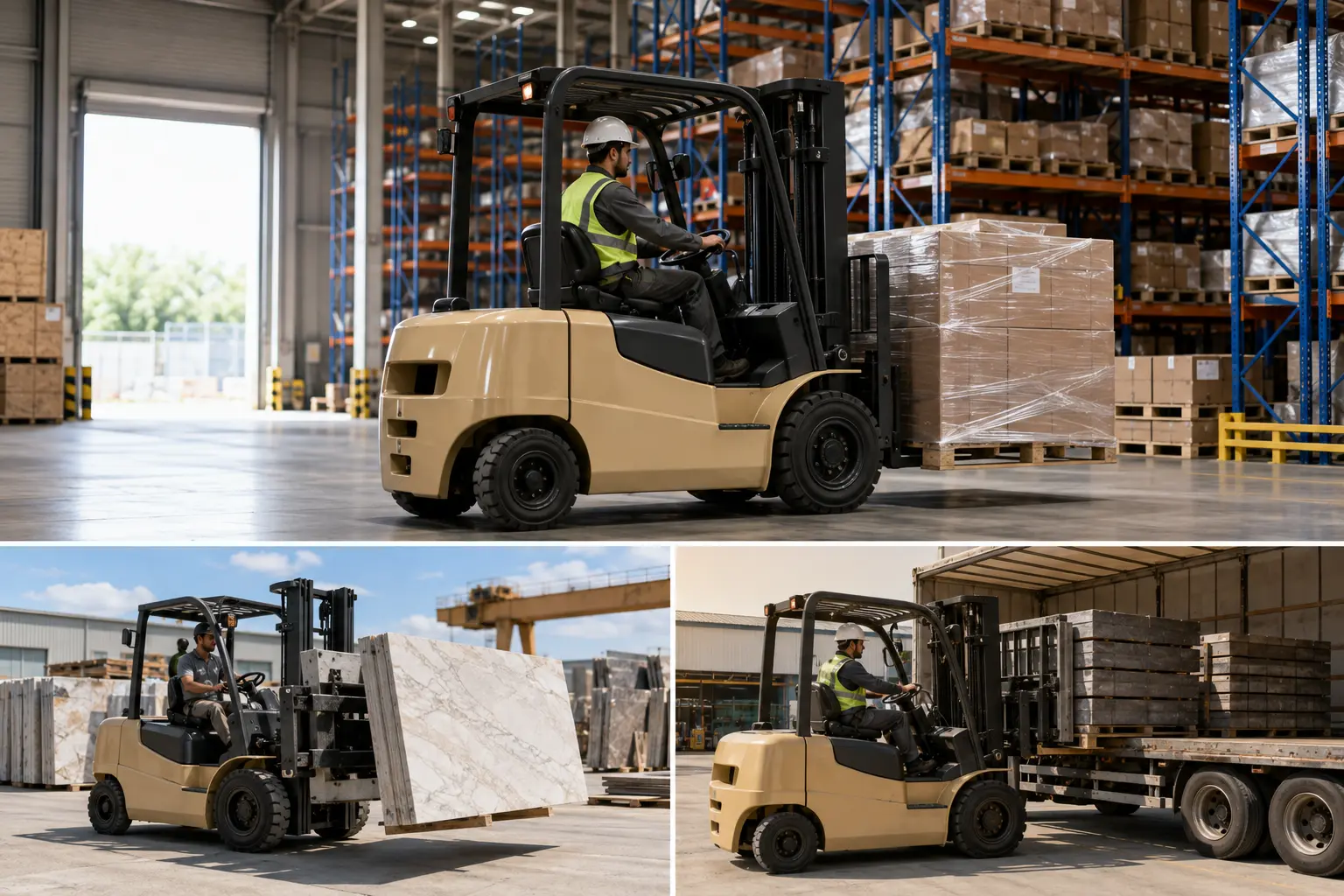
This is why Counterbalance Forklifts should be sized by a complete load profile. Rated capacity is only meaningful when the actual load weight, load center, lift height, mast, attachment, tire type and ground condition match the forklift data plate. For warehouses, factories, cold-chain sites, building material yards and logistics fleets, a correct capacity decision can reduce overload risk, product damage, unsafe stacking, tire wear, battery stress and avoidable downtime.
counterbalance forklifts supplier
Why Rated Capacity Alone Is Not Enough
Forklift buyers often start with one question: “How many tons can it lift?” That question is useful, but incomplete. A counterbalance forklift uses its truck weight and rear counterweight to balance a load positioned in front of the mast. The farther the load center moves forward, the greater the tipping moment becomes. This means the same 2,000 kg load can create very different stability demands depending on whether its center of gravity is 500 mm, 600 mm or 800 mm from the fork face.
A professional Counterbalance Forklifts manufacturer should help buyers read capacity charts, confirm load center assumptions, choose mast height, review attachments, match tire type to the site and select a power system that fits the duty cycle. The best forklift is not always the largest model. It is the model that safely handles the real load at the required height, in the actual operating environment, with enough margin for daily productivity.
| Selection Factor | Why It Matters | Buyer Risk | Required Check |
|---|---|---|---|
| Actual load weight | Base capacity requirement | Under-sized forklift | Weigh real goods |
| Load center | Controls stability and residual capacity | Tip-over or overload | Measure load depth |
| Pallet size | Changes center of gravity | Capacity loss | Confirm pallet dimensions |
| Lift height | Reduces safe capacity at height | Unstable stacking | Check capacity chart |
| Attachment | Adds weight and shifts load forward | Lower residual capacity | Recalculate rating |
| Operating surface | Affects traction and stability | Outdoor or ramp risk | Review ground condition |
What Is Load Center on Counterbalance Forklifts?
Simple Definition for Buyers
Load center is the horizontal distance from the fork face to the load’s center of gravity. A common rated load center is 500 mm or 600 mm, depending on market, truck class and capacity range. If a pallet is 1000 mm deep and evenly loaded, the center may be around 500 mm. If a pallet is 1200 mm deep and evenly loaded, the center may be around 600 mm. If the load is longer, uneven or front-heavy, the effective load center may move farther forward.
When the load center increases, the forklift must resist more forward tipping force. This is why a truck rated at 3,000 kg at a 500 mm load center may not safely lift a 3,000 kg load when the actual load center is 700 mm. Buyers should never assume rated capacity is a fixed number for every load shape.
Why Counterbalance Forklifts Need Counterweight Balance
Counterbalance forklifts place the load in front of the front axle and use the truck’s own weight and counterweight behind the axle to balance it. The load creates a forward moment. The truck creates a counteracting moment. If the load is too heavy, too far forward or too high, stability margin is reduced.
A simple screening concept is:
Load moment = load weight × load center
| Load Weight | Load Center | Load Moment | Meaning |
|---|---|---|---|
| 2,000 kg | 500 mm | 1,000,000 kg·mm | Standard compact pallet |
| 2,000 kg | 600 mm | 1,200,000 kg·mm | Deeper pallet |
| 2,000 kg | 700 mm | 1,400,000 kg·mm | Long load, higher risk |
| 3,000 kg | 500 mm | 1,500,000 kg·mm | Rated load example |
| 3,000 kg | 700 mm | 2,100,000 kg·mm | May exceed actual capacity |
This table is for buyer understanding only. Actual safe capacity must follow the forklift data plate, manufacturer capacity chart and approved attachment rating.
Why Load Center Changes Forklift Capacity
Rated Capacity vs Real Load Capacity
Forklift rated capacity is normally stated at a specified load center and lift height. The data plate should be checked before operation. A forklift rated at 3,000 kg at a 500 mm load center may not safely lift 3,000 kg if the load center is longer, the mast height is higher or an attachment changes the load distance.
Buyers should evaluate the data plate, lift height, mast type, attachment configuration, fork length, truck condition and load size together. For operations that include both warehouse racks and outdoor loading, it is useful to study how to choose Counterbalance Forklifts for indoor and outdoor use because floor condition, tire type, power source and working environment can affect the final truck configuration.
Capacity Loss with Longer Loads
Long loads create greater forward leverage. Even if the load weight is within nominal rating, the forklift may be overloaded because the load moment is higher. This is common with long crates, machinery bases, building material pallets, oversized export packaging, pipe bundles and loads with uneven weight distribution.
| Rated Truck Example | Rated Load Center | Actual Load Center | Capacity Direction |
|---|---|---|---|
| 2.5T forklift | 500 mm | 500 mm | Near rated condition |
| 2.5T forklift | 500 mm | 600 mm | Capacity reduced |
| 2.5T forklift | 500 mm | 800 mm | Significant capacity loss |
| 3.5T forklift | 500 mm | 600 mm | May be safer depending chart |
| 5.0T forklift | 600 mm | 800 mm | Needs residual capacity check |
How to Choose Capacity by Load Weight
Step 1: Measure the Heaviest Real Load
Buyers should not rely only on catalog weights or operator estimates. Weigh the heaviest pallet, bin, crate, coil, machinery part or material bundle. Include pallet weight, packaging, moisture, wrapping, container weight and possible product variation. In many warehouses, the “average load” is not the same as the maximum load that appears during peak season or special orders.
Record average load weight, maximum load weight, peak load condition, packaging weight, pallet weight, damaged-load risk and shifted-load possibility. If the warehouse handles many different SKUs, group loads by weight and dimension. This helps identify whether one forklift model can cover all operations or whether a heavier-duty truck is needed for special loads.
Step 2: Add Operational Margin
A forklift should not operate at its maximum rating all day. Capacity margin improves safety, efficiency, stability and service life. If the forklift frequently handles maximum loads, chooses high lift heights, travels over ramps or operates outdoors, the buyer should select a higher capacity class or request a residual capacity chart.
| Load Pattern | Suggested Capacity Planning Direction | Reason |
|---|---|---|
| Stable compact pallet | Rated capacity plus margin | Normal operation |
| Frequent maximum load | Choose higher capacity class | Reduce stress |
| Long or oversized load | Confirm residual capacity | Load center increases |
| Uneven load | Add capacity and stability margin | Center of gravity shifts |
| High stacking | Check capacity at height | Residual capacity drops |
| Attachment use | Recalculate capacity | Attachment reduces rating |
How Pallet Size Affects Load Center
Standard Pallet vs Oversized Pallet
Pallet depth affects load center. A 1000 mm deep pallet may place the center around 500 mm if evenly loaded. A 1200 mm deep pallet may place the center around 600 mm. Oversized pallets, long crates or machinery parts may push the load center even farther forward. This matters because capacity decreases as the effective load center increases.
Common load formats include 1000×1200 mm pallets, 1200×1200 mm pallets, 800×1200 mm pallets, 1100×1100 mm pallets, custom export crates, long steel bundles, building material pallets, paper rolls, stone packages and machinery crates. Each format should be measured, not guessed.
Load Distribution Matters More Than Pallet Size Alone
Even on the same pallet, load distribution changes the center of gravity. If heavy parts sit toward the front, the actual center is farther away from the fork face. If the load shifts during travel, stability changes. Liquid containers and rolling loads may create dynamic effects that need extra safety margin.
| Load Type | Load Center Risk | Buyer Decision |
|---|---|---|
| Even palletized goods | Predictable center | Standard selection possible |
| Long crates | Forward center | Choose higher capacity or longer forks |
| Machinery parts | Uneven weight | Confirm center of gravity |
| Paper rolls | Rolling and center risk | Use attachment and capacity chart |
| Stone packages | High weight and special handling | Use specific equipment |
| Liquid containers | Dynamic load movement | Add stability margin |
How Lift Height and Mast Type Affect Capacity
Why Higher Lifting Reduces Stability Margin
The higher the load is lifted, the greater the stability risk becomes. A forklift may carry a load safely at travel height but may not have enough residual capacity to stack the same load at maximum lift height. Buyers should check required rack beam height, stacking height, mast type, load center and capacity chart together.
Common mast options include duplex mast, triplex mast, full free lift mast, container mast and high-lift mast. A high mast improves stacking height, but capacity at height must be verified. Indoor warehouses should also check door clearance, container height, overhead beams, sprinklers and rack layout.
Capacity at Maximum Lift Height
| Operation | Key Capacity Question | Buyer Check |
|---|---|---|
| Ground transport | Can truck carry low load? | Rated capacity and stability |
| Truck loading | Can it handle ramps and dock plates? | Surface and load center |
| Rack stacking | Can it lift to beam height? | Residual capacity at height |
| Container work | Does mast fit container? | Mast height and capacity |
| Outdoor stacking | Is ground uneven? | Tire and stability margin |
How Attachments Change Rated Capacity
Side Shifter Fork Positioner Clamp and Rotator
Attachments improve productivity, but they change forklift capacity. A side shifter helps align pallets faster. A fork positioner reduces manual fork adjustment. A clamp handles paper rolls, cartons or bales. A rotator supports dumping and special handling. However, attachments add weight and often move the load forward, reducing residual capacity.
Buyers should not assume the original truck capacity remains unchanged after adding an attachment. The data plate should match the actual configuration. If the forklift uses longer forks, fork extensions, clamps or other special attachments, ask the supplier to confirm the approved residual capacity.
Attachment Capacity Checklist
| Attachment | Benefit | Capacity Risk | Buyer Check |
|---|---|---|---|
| Side shifter | Easier pallet alignment | Adds weight | Confirm new data plate |
| Fork positioner | Faster width adjustment | Added load distance | Recalculate capacity |
| Clamp | Handles non-pallet loads | Heavy attachment | Use approved chart |
| Rotator | Dumping and handling | Load shifts | Check stability |
| Fork extensions | Longer reach | Moves load center forward | Avoid overload |
| Push-pull | Slip sheet handling | Special load dynamics | Supplier approval |
Choosing Electric vs Diesel Counterbalance Forklifts by Load
Electric Counterbalance Forklifts
Electric counterbalance forklifts are common for warehouses, food storage, retail logistics, indoor distribution, manufacturing plants and clean operating areas. They are quieter, cleaner and suitable for controlled environments. Lithium battery models are growing because they can support opportunity charging, lower routine battery maintenance and more flexible shift planning.
Electric models are often ideal for palletized warehouse loads, dock work, indoor storage, light outdoor concrete yards and operations where emissions, noise and operator comfort matter. However, buyers should confirm battery capacity, charging plan, shift length, load weight, ramp use and charger availability.
Diesel or IC Counterbalance Forklifts
Diesel or internal combustion forklifts are often used outdoors, on rougher ground or in high-intensity yards where long runtime and power are important. They can be suitable for building materials, containers, heavy pallets, construction logistics and dusty or rugged environments. Buyers should review emissions, ventilation, fuel storage, maintenance access and noise limitations.
| Power Type | Best Use | Load Capacity Consideration | Buyer Risk |
|---|---|---|---|
| Electric lead-acid | Indoor warehouses | Stable moderate loads | Battery maintenance |
| Electric lithium | Indoor/outdoor controlled use | Strong duty cycle | Charging plan |
| Diesel | Outdoor heavy work | Heavy loads and long shifts | Emissions and noise |
| LPG/gasoline | Mixed use where allowed | Medium loads | Fuel and ventilation |
| Heavy-duty electric | Cleaner heavy handling | Need battery and charger plan | Upfront cost |
Indoor vs Outdoor Load Handling
Indoor Warehouse Selection
Indoor forklifts need turning radius, aisle width, mast height, floor condition, tire type, power system, visibility, door clearance and charging plan. Even when the load is not extremely heavy, the forklift must move efficiently through aisles and around racks. If the truck is too large for the aisle, productivity drops. If the truck is too small for the load center, safety risk rises.
Buyers should check aisle width, rack height, door height, floor flatness, load center, turning radius, battery room or charging station, operator visibility and pallet dimensions. For tight indoor spaces, the correct forklift capacity must be balanced with turning radius and mast configuration.
Outdoor Yard Selection
Outdoor operations need ground clearance, tire type, slope capability, gravel performance, rain exposure, dust protection, chassis durability and load stability. A forklift that works perfectly on a flat warehouse floor may not perform safely on uneven outdoor ground with long loads.
For heavy-industry sourcing, buyers can review top Counterbalance Forklifts heavy industry procurement guide considerations such as high load weight, outdoor traction, stability margin, maintenance support and long-duty-cycle performance. Heavy loads need more than rated tonnage; they need the right tire, mast, chassis and service support.
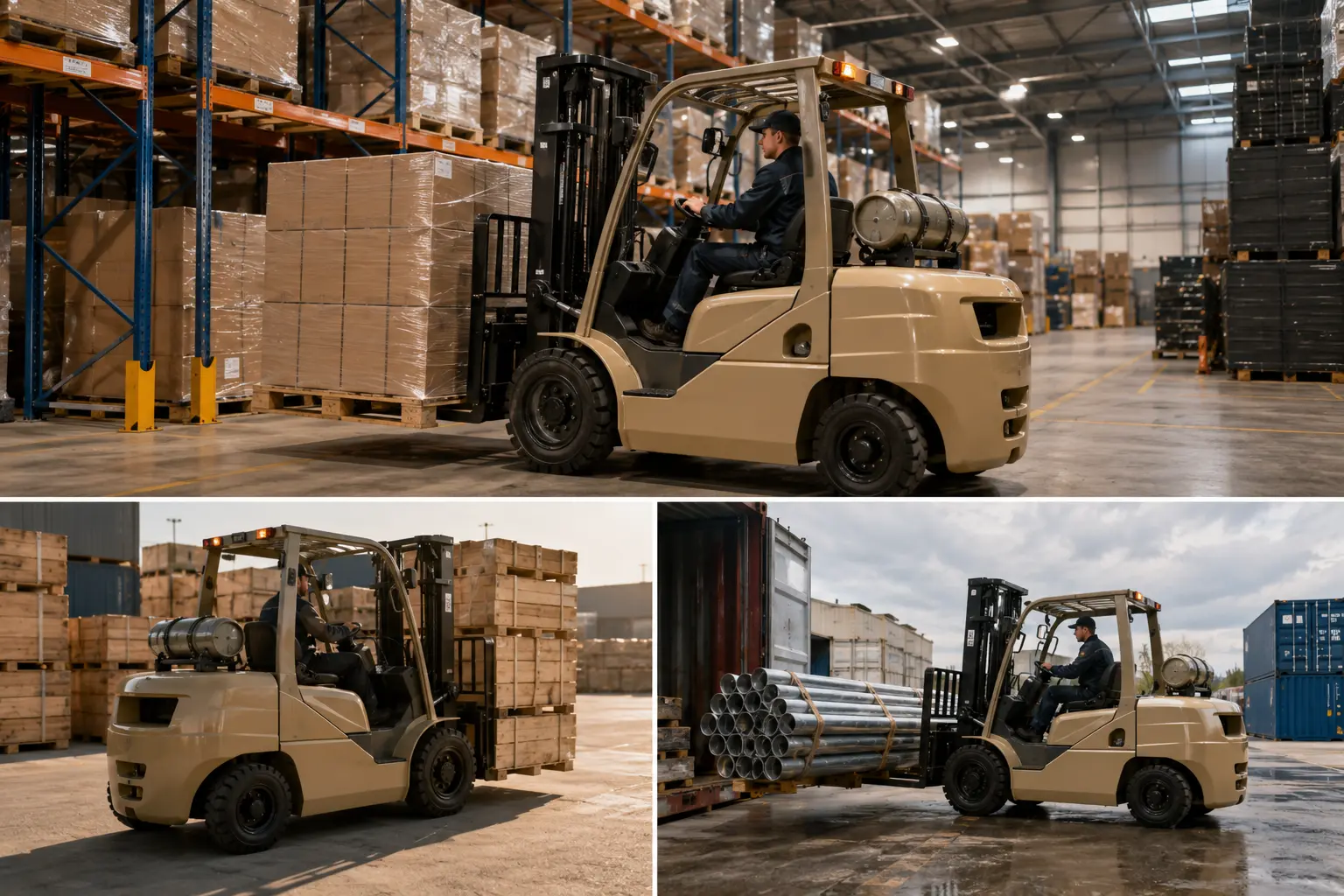
High-quality counterbalance forklifts
Reading the Forklift Data Plate
What Buyers Should Check on the Data Plate
The data plate is the buyer’s safety reference for actual approved capacity. It may include rated capacity, load center, maximum lift height, mast type, truck weight, battery weight for electric trucks, tire type, model, serial number and attachment configuration. Operators and fleet managers should read it before handling unfamiliar loads.
If the forklift uses a side shifter, clamp, longer forks or mast modification, the data plate should reflect the correct configuration. Operating with an incorrect or unreadable plate creates safety and compliance risk. Buyers should request proper documentation from the supplier before commissioning.
Why Data Plate Must Match Actual Configuration
A data plate for a standard forklift may not represent a forklift equipped with a heavy attachment. If the attachment adds weight and moves the load forward, residual capacity is lower. If the mast is changed or lift height increases, capacity at height must be reviewed. The plate and capacity chart should match the actual truck, not a generic brochure.
Calculating Practical Forklift Capacity: A Buyer-Friendly Method
Load Moment Concept
The load moment concept helps buyers understand why load center matters. For example, a 2,500 kg load at a 500 mm center creates 1,250,000 kg·mm of load moment. The same load at a 700 mm center creates 1,750,000 kg·mm. That is 40% more moment even though the weight did not change.
This simplified method is useful for screening risk, but it is not a final safety approval. Real capacity depends on manufacturer design, mast, lift height, tires, attachment, truck condition and approved capacity chart.
Practical Selection Steps
| Step | Buyer Action | Purpose |
|---|---|---|
| 1 | Weigh the real load | Confirm maximum requirement |
| 2 | Measure load depth | Estimate load center |
| 3 | Check pallet stability | Avoid shifted loads |
| 4 | Identify maximum lift height | Confirm stacking capacity |
| 5 | List attachments | Recalculate residual capacity |
| 6 | Review surface and aisle width | Match environment |
| 7 | Request capacity chart | Confirm approved capability |
Common Buyer Mistakes
Mistake 1: Selecting by Load Weight Only
A forklift may be under-capacity when the load center is longer than the rated value. Buyers should always check both weight and load center, then verify residual capacity.
Mistake 2: Ignoring Attachment Weight
A side shifter, fork positioner, clamp or rotator may reduce available capacity. Buyers should request an updated data plate or approved rating when attachments are fitted.
Mistake 3: Ignoring Lift Height
A truck may carry a load low but fail to stack it safely at height. Rack height and residual capacity should be reviewed before purchase.
Mistake 4: Using Fork Extensions Incorrectly
Fork extensions can move the effective load center forward. If operators use them without capacity review, overload and instability risk increase.
Mistake 5: Choosing Indoor Tires for Outdoor Work
Poor tire selection can reduce traction, stability and tire life. Outdoor yards, ramps and uneven ground require suitable tire and chassis configuration.
Supplier Selection Checklist for Counterbalance Forklifts
What a Counterbalance Forklifts Supplier Should Provide
A reliable supplier should provide rated capacity options, residual capacity chart, load center guidance, mast options, fork length options, attachment compatibility, electric and diesel configurations, lithium battery options, tire selection, indoor/outdoor configuration, safety documentation, operator manual, spare parts support, warranty, maintenance support, dealer support and custom configuration.
RFQ Checklist for Buyers
Before requesting a quote, buyers should prepare maximum load weight, average load weight, load dimensions, pallet size, estimated load center, lifting height, mast requirement, aisle width, operating environment, floor condition, ramp or slope condition, attachment need, fork length, power preference, shift hours, charging condition, door or container height, safety requirement, budget and delivery timeline. Buyers can contact a Counterbalance Forklifts supplier with these details to receive a more accurate capacity recommendation.
| RFQ Item | Why It Matters | Buyer Requirement |
|---|---|---|
| Maximum load weight | Controls base capacity | Weighed maximum load |
| Load center | Controls residual capacity | Measured load depth and center of gravity |
| Lift height | Controls stacking safety | Required rack or stacking height |
| Attachment | Changes capacity | Side shifter, clamp, positioner or rotator |
| Operating surface | Affects stability | Indoor floor, outdoor yard, ramp or gravel |
| Power system | Controls duty cycle | Electric, lithium, diesel or LPG |
Industry Trends in Counterbalance Forklift Selection
Buyers Are Moving from Rated Capacity to Residual Capacity
More buyers understand that actual lifting ability depends on load center, attachment and lift height. Residual capacity charts are becoming more important in procurement discussions.
Lithium Electric Counterbalance Forklifts Are Growing
Lithium models are increasingly used for cleaner indoor logistics and mixed-use operations. They can support opportunity charging and reduce routine battery maintenance when the charging plan is suitable.
Attachments Are Becoming More Common
Fork positioners, side shifters and clamps improve productivity, but they require capacity review. Buyers should confirm attachment impact before final model selection.
Safety Documentation Is Becoming More Important
Buyers increasingly request data plates, manuals, capacity charts, training support and maintenance documentation. Safety-driven procurement can reduce long-term operating risk.
Total Cost of Ownership Matters More Than Purchase Price
A properly sized forklift can reduce tire wear, battery stress, unsafe handling, product damage and downtime. The lowest purchase price may not produce the lowest lifetime cost.
Final Recommendation: Choose by Real Load Moment, Not Nominal Tonnage
Counterbalance Forklifts should be selected by real load weight, load center, pallet dimensions, lift height, mast type, attachment configuration, operating surface, tire type and power system. A 3-ton rating is not a universal promise. It is a rated condition tied to a specified load center, height and configuration. If the load is longer, higher, uneven or handled with attachments, residual capacity must be confirmed.
Before requesting Counterbalance Forklifts pricing, prepare your maximum load weight, pallet size, load dimensions, estimated load center, lifting height, aisle width, operating surface, attachment needs, power preference and daily shift hours. A professional Counterbalance Forklifts supplier can help confirm the right capacity class, residual capacity and configuration before purchase.
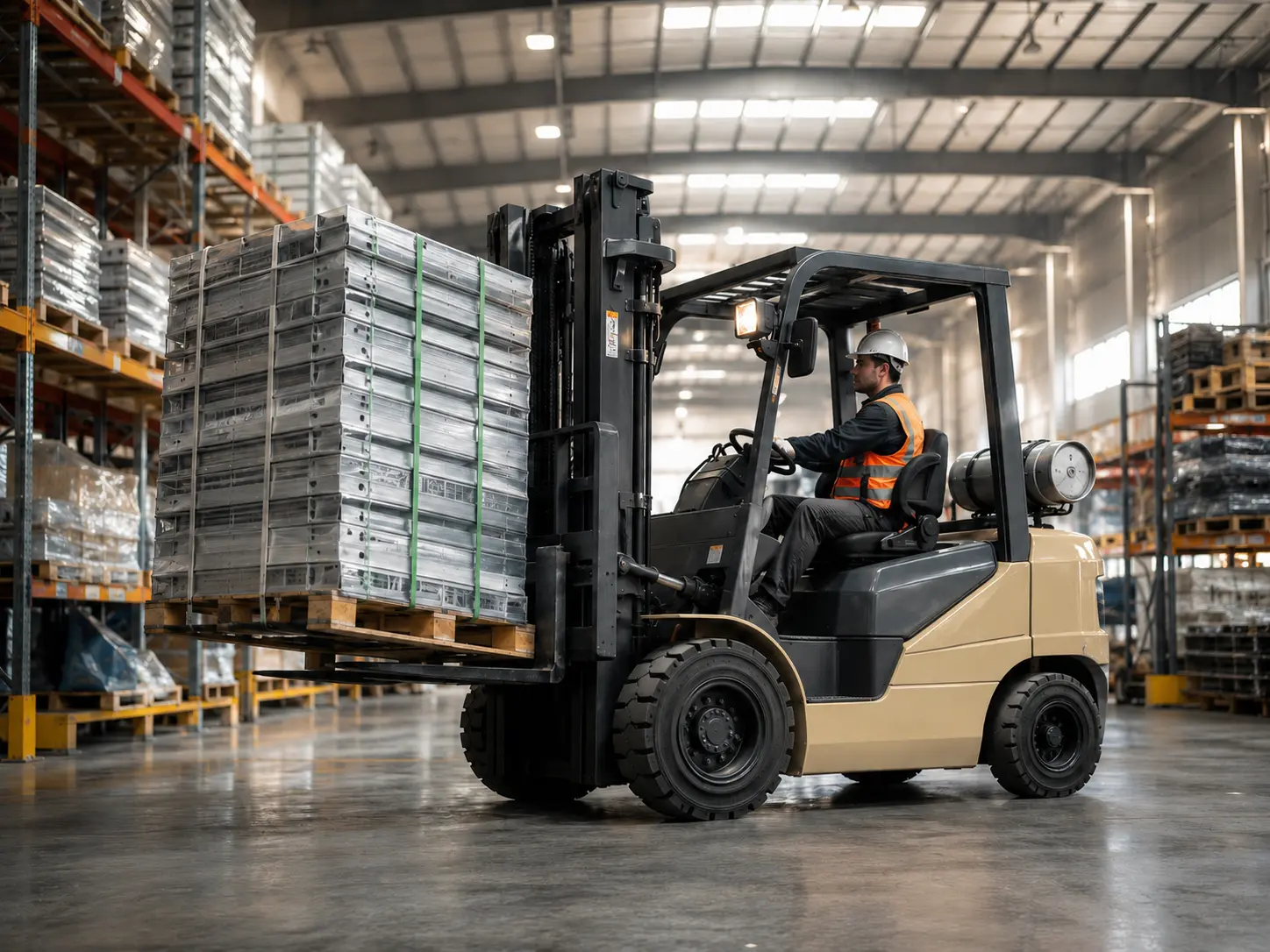
Counterbalance Forklifts
Frequently Asked Questions About Counterbalance Forklifts Load Weight and Load Center
1. What is load center on a counterbalance forklift?
Load center on a counterbalance forklift is the horizontal distance from the fork face to the load’s center of gravity. It affects stability and lifting capacity because a load positioned farther forward creates more forward tipping moment. Many forklifts are rated at a specified load center such as 500 mm or 600 mm, depending on truck type and market. Buyers should measure the actual load depth and weight distribution before assuming the rated capacity applies.
2. How does load center affect forklift capacity?
As load center moves forward, the load moment increases and the available forklift capacity decreases. For example, a 2,000 kg load at 500 mm creates less tipping moment than the same 2,000 kg load at 700 mm. This is why long crates, oversized pallets, uneven loads and fork extensions can reduce safe capacity. Buyers should check the manufacturer data plate and residual capacity chart instead of relying only on nominal tonnage.
3. Can a 3 ton forklift lift a 3 ton load safely?
A 3 ton forklift can lift a 3 ton load safely only when the load weight, load center, lift height, mast configuration, attachment and operating condition match the approved data plate. If the actual load center is longer than the rated value, or if a side shifter, clamp or fork extension is added, the forklift may not safely handle the same 3 ton load. Buyers should confirm residual capacity before purchase and operation.
4. Do forklift attachments reduce capacity?
Yes, forklift attachments often reduce capacity because they add weight and move the load forward. Side shifters, fork positioners, clamps, rotators, push-pulls and fork extensions can all change residual capacity. The forklift data plate should match the attachment configuration. Buyers should request supplier approval or an updated capacity chart before using attachments with heavy, long or high-stacked loads.
5. How do I choose a Counterbalance Forklifts supplier?
Choose a Counterbalance Forklifts supplier that can provide rated capacity options, residual capacity charts, load center guidance, mast options, fork length options, attachment compatibility, electric and diesel configurations, lithium battery options, tire recommendations, safety documentation, operator manuals, spare parts support and after-sales service. A reliable supplier should ask about load weight, pallet size, load center, lift height, aisle width, working surface and shift hours before recommending a model.
References
- Powered Industrial Trucks Load Handling Guidance, Author: OSHA Technical Contributors, Institution: Occupational Safety and Health Administration, Source: Forklift Safety Reference.
- ISO 22915-2:2018 Industrial Trucks – Verification of Stability – Counterbalanced Trucks with Mast, Author: ISO Technical Committee Contributors, Institution: International Organization for Standardization, Source: Stability Verification Standard.
- Industrial Truck Safety and Load Capacity Training Guide, Author: Material Handling Safety Contributors, Institution: Industrial Safety Training Publications, Source: Forklift Operation Reference.
- Forklift Truck Capacity and Load Center Engineering Guidance, Author: Material Handling Engineering Contributors, Institution: Warehouse Equipment Technical Publications, Source: Load Center Reference.
- Powered Industrial Trucks Operator Training Requirements, Author: OSHA Technical Contributors, Institution: Occupational Safety and Health Administration, Source: Safety Training Reference.
- Industrial Trucks and Warehouse Equipment Application Guide, Author: Material Handling Industry Contributors, Institution: Warehouse Logistics Publications, Source: Material Handling Reference.
- Battery Electric Forklift Operation and Maintenance Guidance, Author: Industrial Vehicle Technical Contributors, Institution: Electric Material Handling Publications, Source: Electric Forklift Reference.
- Quality Management Systems Requirements, Author: ISO Technical Committee Contributors, Institution: International Organization for Standardization, Source: Quality Management Reference.
How Buyers Should Choose Counterbalance Forklifts by Load Center
How should buyers start choosing Counterbalance Forklifts?
Buyers should start with the real maximum load weight, load dimensions, pallet size, estimated load center, required lift height, attachment needs, operating surface, aisle width and power preference. Rated capacity alone is not enough for safe selection.
Why does load center matter more than many buyers expect?
Load center controls how much forward tipping moment the load creates. When the load center moves forward, the forklift’s available capacity decreases. A compact 3,000 kg pallet and a long 3,000 kg crate may require different capacity classes.
What option works best for compact palletized warehouse loads?
For compact palletized warehouse loads, an electric or lithium counterbalance forklift may work well when the rated capacity, load center, aisle width, lift height and charging schedule match the operation.
What option works best for long oversized or heavy outdoor loads?
For long, oversized or heavy outdoor loads, prioritize higher residual capacity, suitable tires, strong mast stability, outdoor chassis configuration, correct fork length and supplier-confirmed capacity at the actual load center.
Consideration: What creates the highest safety risk?
The highest risks come from selecting by load weight only, ignoring attachments, using fork extensions without review, lifting high without checking residual capacity and operating outdoor loads with indoor-oriented tires.
Recommendation
Select the forklift by load moment, residual capacity and real application conditions. Request the capacity chart and confirm that the data plate matches the truck configuration before operation.
Send your supplier the load weight, load dimensions, pallet size, load center estimate, lift height, attachment requirement, working surface and shift schedule. A qualified Counterbalance Forklifts supplier can recommend a safer and more productive configuration.